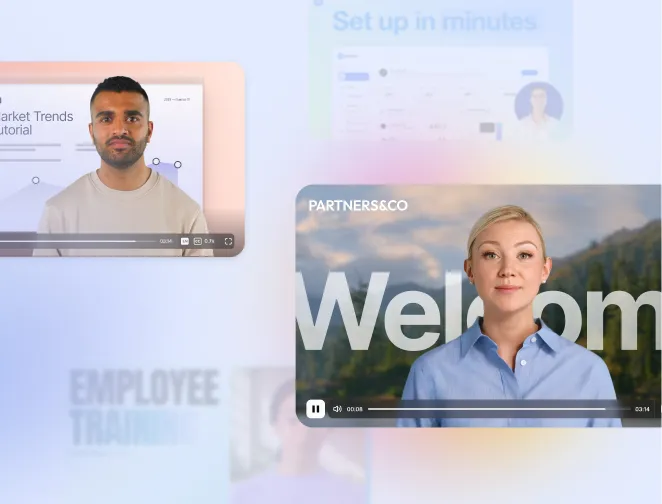




Create AI videos with 240+ avatars in 160+ languages.
Create compliance training that works
Most compliance issues arise in the middle of everyday work.
Documents are shared. Requests are forwarded. Personal data shows up where it probably shouldn’t. In the moment, these situations don’t register as compliance issues.
In this guide, we’ll explain how to create compliance training videos that support learning in the flow of work and remain current as requirements change.
Compliance training video templates you can customize
Templates help teams deliver consistent compliance guidance and update it as requirements change.
Data privacy compliance training
This template helps teams explain everyday data privacy expectations using realistic workplace scenarios, such as handling sensitive information, knowing when data can be shared, and spotting potential issues.
It uses a consistent structure, so it can be reused across regions, roles, and regulations (such as GDPR and HIPAA) without losing clarity.
Anti-money laundering training
Anti-money laundering regulations require employees to recognize and act on financial crime risks in their everyday work. This template uses realistic workplace scenarios to clearly show what to look for and when to escalate concerns.
Why examples work better than explanations in compliance training
Compliance guidance is most effective when people can see what “good” looks like in context.
Policies describe rules. Examples show how those rules apply while work is already happening.
Short videos built around realistic situations help people recognize when guidance applies and how to respond.
Templates make this approach repeatable. By keeping the structure consistent and changing only the scenario, teams can update guidance as regulations evolve while preserving clarity and intent.
From here, the focus shifts to applying this pattern consistently across different compliance topics and teams.
Step 1: Start with a real compliance situation
Begin with a situation employees actually encounter, such as handling personal data.
Designing for real situations makes training immediately recognizable and easier to apply.
Step 2: Clarify what action is expected
Each video should answer one simple question: What should I do here?
Avoid reading policy language on screen.
Instead, show the situation, clarify the expected action, and make it clear where employees should go if something feels unclear or needs escalation.
Step 3: Keep the script short and concrete
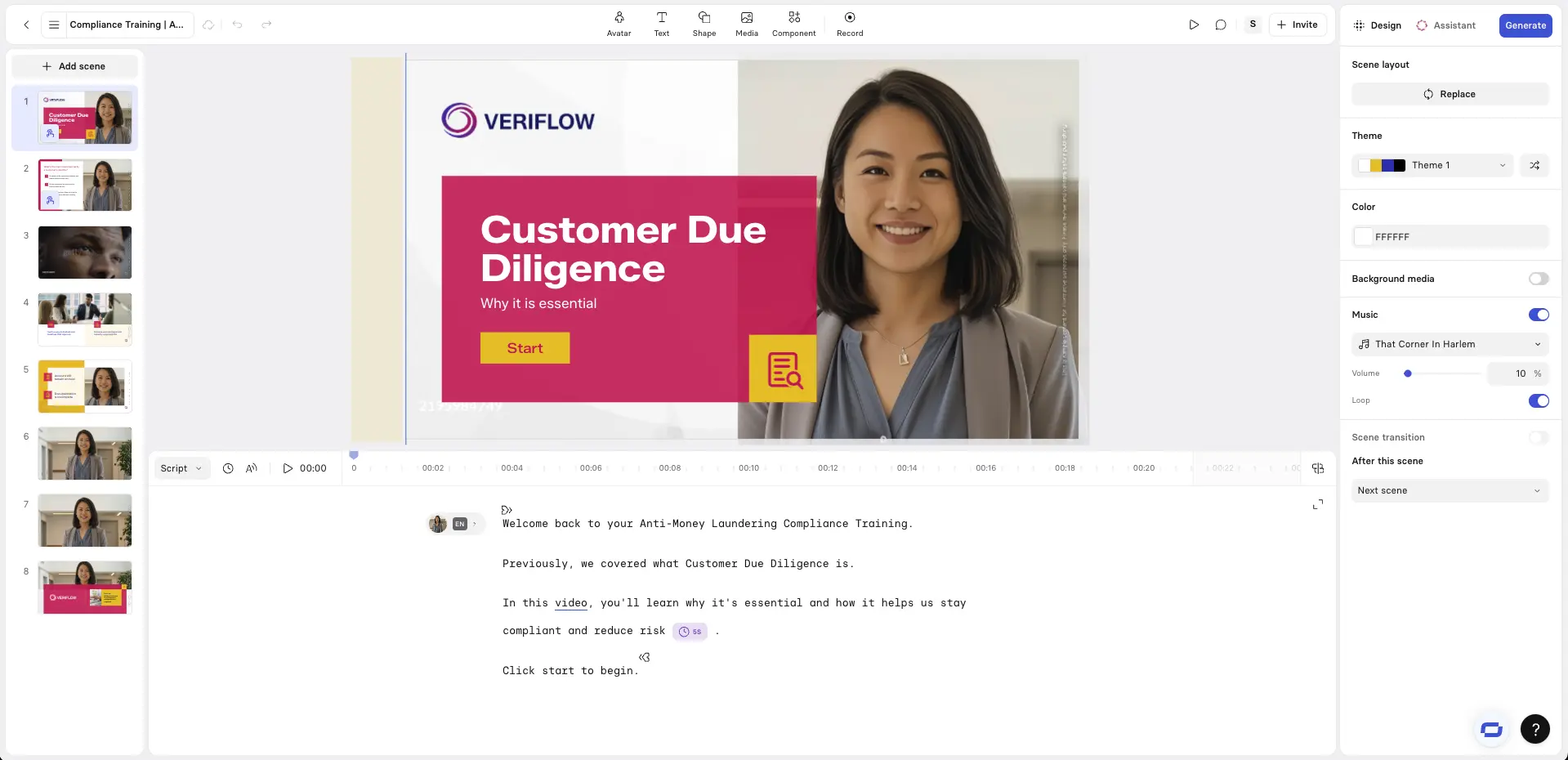
Compliance videos work best when scripts are brief and focused on the situation at hand.
Use plain language and speak directly to the viewer. Let visuals do some of the work so the script doesn’t need to explain everything.
Remember, the goal is recognition and recall.
💡Tip: If you want a starting point, you can use a free AI script generator to draft a short, scenario-based compliance script based on your policy language.
Step 4: Use a consistent structure across topics
Consistency matters in compliance training. A familiar structure helps employees focus on the content rather than figuring out how the video works.
Templates support this by keeping the format stable while allowing scenarios, examples, and language to change as needed. This also makes training easier to review, update, and reuse.
Step 5: Publish, review, and update regularly
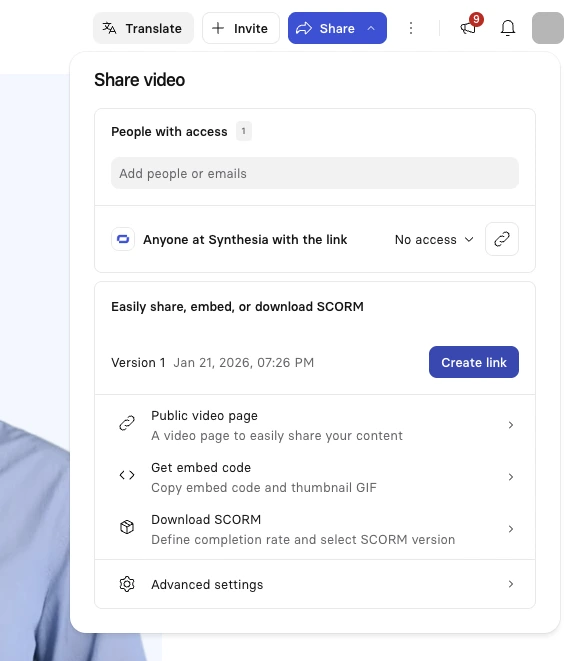
Compliance training is never finished. Regulations change. Guidance evolves. Work practices shift.
Short, reusable videos make it easier to update examples, adjust language, and re-issue training.
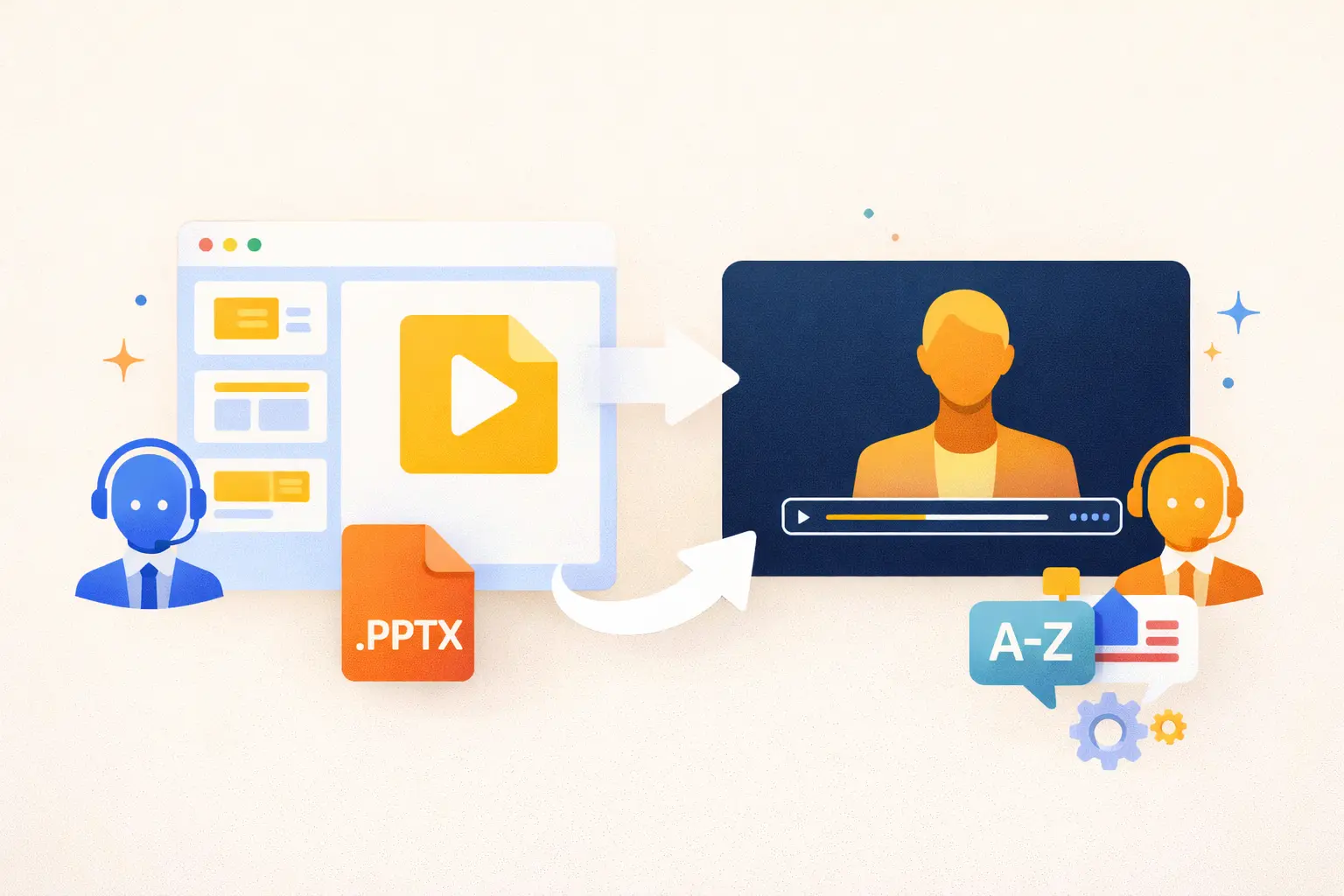
💡Tip: Compliance training often needs to be assigned, tracked, and re-certified. Videos can be shared via LMS or SCORM-compatible platforms so completion and updates are managed centrally.
Remember, the goal isn’t more training. It’s clearer guidance at the moments that matter.
About the author

Strategic Advisor
Kevin Alster
Kevin Alster is a Strategic Advisor at Synthesia, where he helps global enterprises apply generative AI to improve learning, communication, and organizational performance. His work focuses on translating emerging technology into practical business solutions that scale.He brings over a decade of experience in education, learning design, and media innovation, having developed enterprise programs for organizations such as General Assembly, The School of The New York Times, and Sotheby’s Institute of Art. Kevin combines creative thinking with structured problem-solving to help companies build the capabilities they need to adapt and grow.






What are compliance training videos?
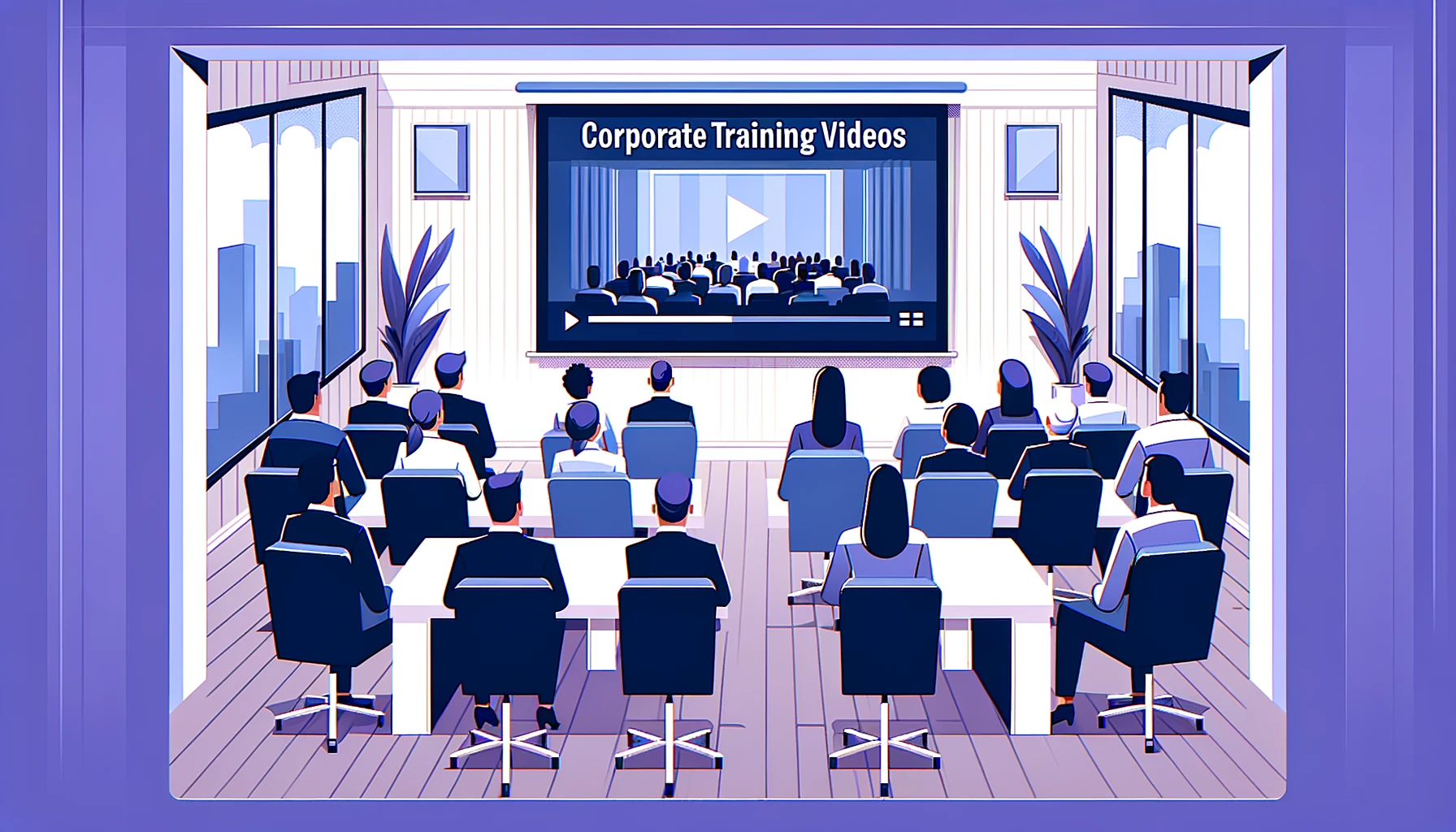
Compliance training videos are short, focused learning assets that help employees understand how laws, regulations, and internal policies apply in everyday work. They are often used to reinforce expectations, support consistent decision-making, and reduce risk across an organization.
What should compliance training include?
Effective compliance training covers realistic situations employees actually face, such as handling personal data, reporting concerns, or responding to conflicts of interest. The focus is on recognizing when a rule applies, understanding the expected action, and knowing where to go when something feels unclear.
How often should compliance training videos be updated?
Compliance training should be reviewed regularly and updated whenever regulations, internal policies, or business practices change. Many organizations update key compliance videos annually or when new guidance is introduced, especially for areas like data privacy.
Can compliance training videos support audits and reporting?
Yes. When designed consistently and updated centrally, compliance training videos help demonstrate that guidance has been delivered clearly and kept current. They can also support tracking and documentation as part of broader compliance programs.